
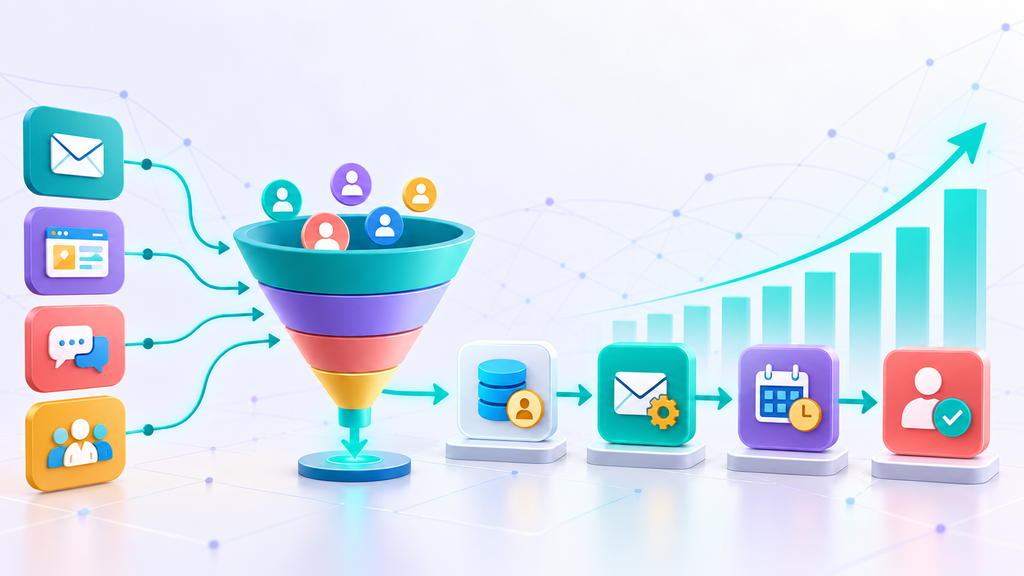
Imagine your sales team spending half their day manually typing contact details into a CRM. They copy email addresses, send individual follow-ups, and track responses on spreadsheets. Meanwhile, hot leads cool down, and potential customers slip through the cracks.
Manual sales tasks eat up valuable time and hurt your bottom line. Scaling a business requires a faster, smarter way to handle your sales pipeline.
That is where modern software comes in. In this guide, you will learn how SaaS sales automation streamlines your workflow, attracts qualified prospects, and dramatically improves your sales conversion rates.
| KEY TAKEAWAYS • SaaS sales automation eliminates repetitive admin work, giving reps more time to close deals. • AI workflow automation tools qualify leads instantly and route them to the right team members. • Automated sales follow-ups keep prospects engaged without letting anyone fall through the cracks. • Platforms like Zapier, Make, and n8n connect your CRM with smart AI models like ChatGPT. • Combining smart tech with a human touch creates a seamless, high-converting customer journey. |
What Is SaaS Sales Automation?
SaaS sales automation uses software to handle repetitive, time-consuming tasks across your revenue funnel. Instead of manually entering data or sending individual outreach messages, smart systems execute these actions automatically.
Modern setups rely heavily on AI workflow automation tools. These platforms connect your customer relationship management (CRM) software with communication channels, artificial intelligence models, and analytical tools.
By removing friction from the buyer’s journey, your team moves prospects from initial interest to a signed contract in a fraction of the time.
How Automation Supercharges Lead Generation
Finding quality prospects is often the hardest part of sales. Automated systems make lead generation efficient, predictable, and scalable.
Instant Lead Capture and Enrichment
When a potential buyer fills out a form on your site, every second counts. Automated workflows instantly log the lead into your CRM and pull extra information, like company size, industry, and location from public databases. Your reps receive a complete profile without doing any manual research.
Smart AI Lead Qualification
Not every contact is a good fit for your product. Using AI lead qualification, smart algorithms analyse incoming data to score leads based on their likelihood to buy. High-intent prospects get flagged for immediate personal outreach, while lower-priority leads enter automated nurturing tracks.
Multi-Channel Prospecting
Reaching buyers requires meeting them where they spend time. Workflow automation platforms allow you to trigger outreach across multiple channels simultaneously:
- Personalised email sequences sent based on user behaviour
- Automated LinkedIn connection requests and follow-ups
- Instant SMS notifications for time-sensitive offers
Converting More Leads with Automated Workflows
Getting a lead is only the first step. To boost your revenue, you must guide that lead toward a purchasing decision.
Automated Sales Follow-Ups
Prompt communication wins deals. Research highlighted by the Harvard Business Review shows that companies responding to leads within an hour are significantly more likely to have meaningful conversations with decision-makers. Automated sales follow-ups guarantee that every prospect gets an instant, personalised reply even outside regular office hours.
Personalised Lead Nurturing
Generic mass emails do not work anymore. Modern systems tailor content based on how a user interacts with your brand. If a lead downloads an e-book about data security, your platform automatically sends relevant case studies and product demos focused on that exact topic.
Frictionless Meeting Scheduling
Back-and-forth emails to find a meeting time waste days. Integrating calendar tools into your automated sales pipeline lets prospects book demos directly on an account executive’s calendar in seconds.
Choosing the Right Workflow Automation Platforms
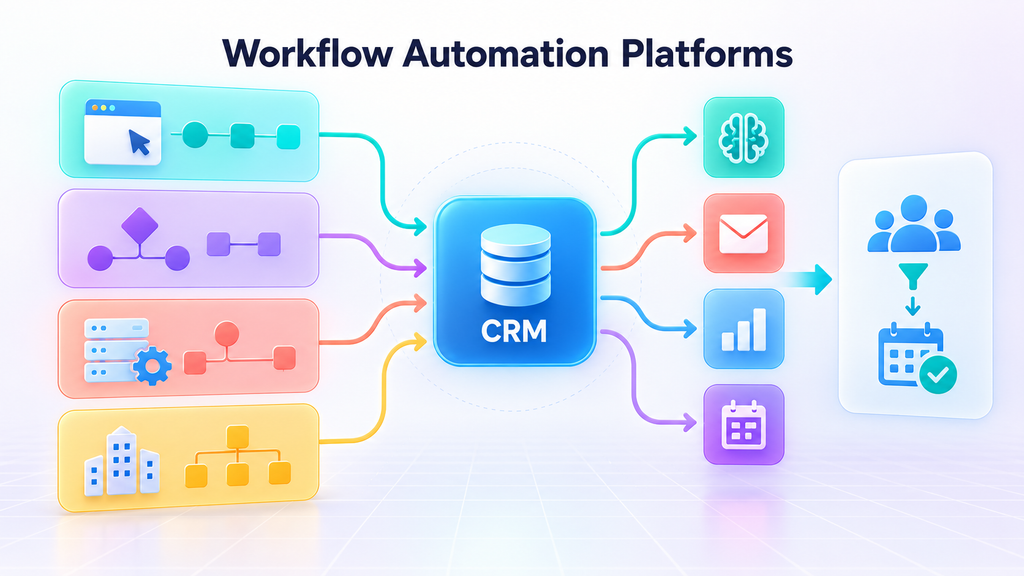
To build a reliable sales engine, you need software that connects your tech stack effortlessly. Here is how popular platforms stack up for business process automation:
| Platform | Best For | Technical Skill Needed | Primary Advantage |
| Zapier | Beginners & quick setups | Low (No-code) | Massive app integration library |
| Make | Complex, visual workflows | Medium (Low-code) | Advanced logic at budget-friendly pricing |
| n8n | Enterprise & self-hosted | High (Developer-friendly) | Total data control and customisation |
| Workato | Large enterprises | High | Bank-grade security and scale |
Combining these platforms with tools like ChatGPT for content writing allows teams to draft custom outreach emails, summarise sales calls, and write meta descriptions automatically. According to sales research from HubSpot, salespeople spend under 30% of their day actually selling, making these time-saving tools vital for team productivity.
Best Practices for Balancing AI and the Human Touch
While automation handles heavy lifting, human connection closes deals. Striking the right balance is essential for long-term success.
- Automate repetitive tasks, not relationships: Use software to schedule meetings, update CRM fields, and route tickets. Let human reps handle sales calls and negotiation.
- Keep messaging authentic: Avoid overly formal or robotic templates. Use plain language and personalised details so messages feel written by a real person.
- Monitor your pipeline data: Check your automation logs regularly to fix broken links, outdated email templates, or incorrect lead scoring logic.
Streamlining Your Revenue Engine
Implementing SaaS sales automation transforms a chaotic outreach process into a predictable revenue system. By letting smart tools handle data entry, lead scoring, and routine follow-ups, your team stays focused on building genuine relationships. Start by automating one small task like lead assignment or welcome emails and scale your workflows as your business grows.
People Also Ask
What is SaaS sales automation?
SaaS sales automation uses software tools to complete routine sales tasks automatically. It handles activities like lead logging, follow-up emails, pipeline tracking, and meeting scheduling without requiring manual effort from sales reps.
How does AI improve lead conversion rates?
AI improves conversion rates by scoring leads instantly, analysing buyer behaviour, and delivering hyper-personalised messaging at the exact right moment. This helps sales teams focus their energy on prospects who are most likely to buy.
Can small businesses afford sales automation tools?
Yes. Modern no-code tools like Zapier and Make offer free or low-cost plans. Small businesses can automate basic lead capture and email follow-ups without spending a fortune on enterprise software.
Will automation replace human sales reps?
No. Automation handles administrative tasks, data entry, and initial outreach. Human reps are still essential for building trust, understanding complex customer needs, and closing high-value deals.